The facade defines the visual identity of a building and mediates the relationship between the inhabited interior and the climatic exterior. Zinc and copper facades offer an architectural answer that brings together three qualities not always easy to reconcile: durability measured in decades, a contemporary visual language and the thermal performance of a ventilated facade.
ZincArt designs and installs metal facades on single-family homes, apartment buildings, public projects, hospitality and refurbishment work. We engage with the design team from the detailing phase, making sure the cladding solution integrates with the rest of the envelope and respects the structural constraints of the substrate.
What a ventilated facade is
A ventilated facade is a double-skin external cladding system in which the zinc or copper sheet is fixed to a sub-frame held away from the main wall by a continuously ventilated air cavity. This cavity opens to the outside at the base and at the top, generating an upward airflow (chimney effect) that flushes out water vapour migrating from inside and dissipates part of the thermal load on the sun-exposed surface.
The construction benefits are concrete:
- The thermal insulation, sitting between the structural substrate and the air cavity, stays dry and delivers its rated performance in full.
- Solar radiation falling on the metal cladding is partly dissipated before it reaches the substrate, lowering the summer heat load.
- The surface-condensation cycles that cause staining, fungal growth and detachment in traditional adhered cladding systems are eliminated.
The sub-frame is normally built from suitable metal profiles, sized case by case to resist wind loads and the self-weight of the cladding, with specific detailing at corners, openings and trim.
Available systems
Depending on the architectural design, the intended visual language and the type of substrate, we offer different cladding systems:
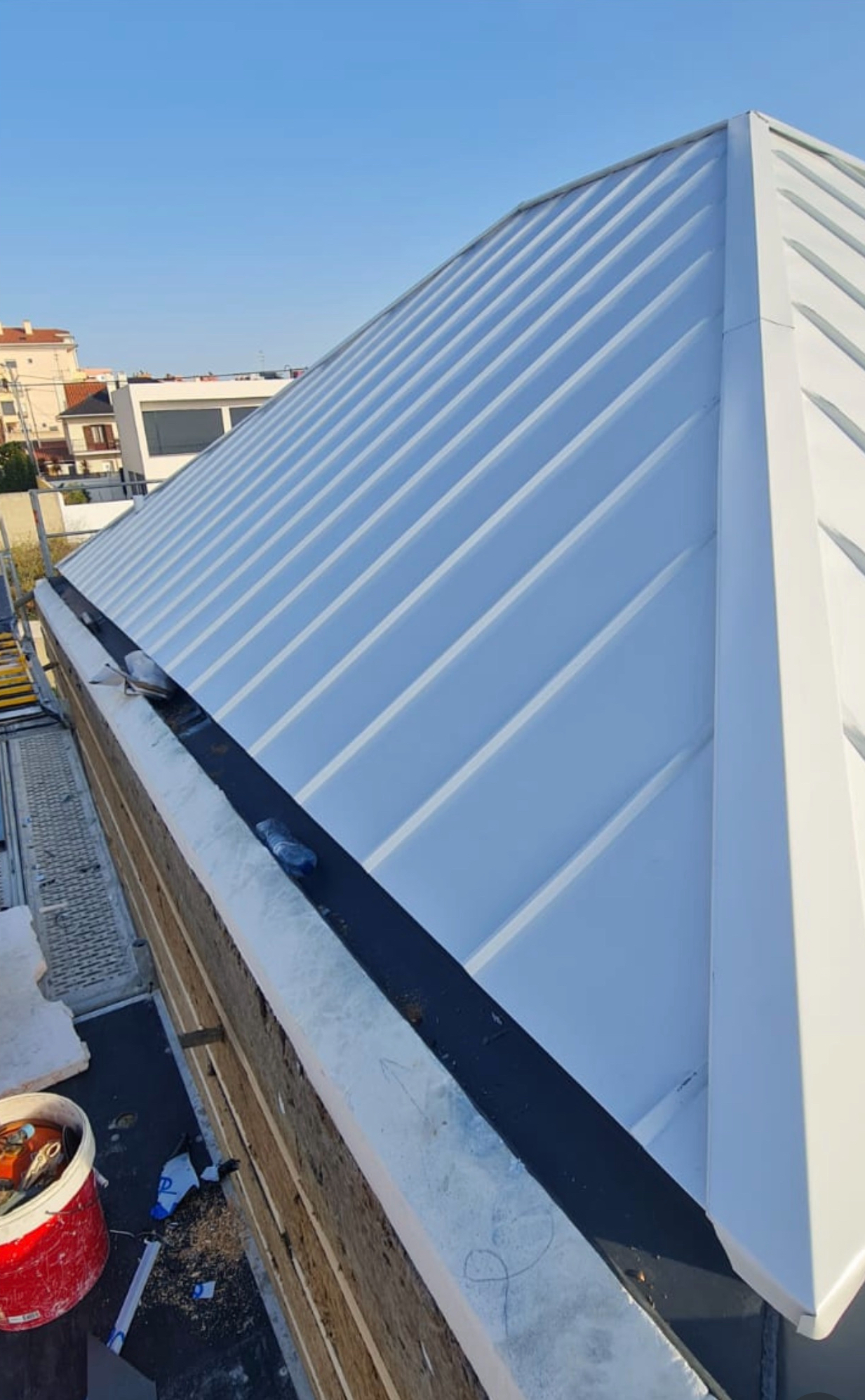
- Vertical or horizontal standing-seam panel. Continuous bays joined by a mechanical seam, reading as a regular pattern of lines. The most discreet system and the one that best carries material continuity from roof to facade.
- Zinc or copper cassette. Three-dimensional modular panel, folded on all four edges, fixed with hidden clips to horizontal rails. Reads as a rhythm of visible divisions, with several sizes and proportions available.
- Interlocking panel (click system). Pre-formed bays joined by a male-female interlock, with faster installation and a final look close to the standing seam.
- Shingle and mixed compositions. For expressive facades, modules of different formats can be combined on the same surface.
Each system supports variations in working width, sheet gauge (typically 0.7 mm to 1.0 mm) and seam type. The final specification is set during design and pricing.
Advantages
A zinc or copper metal facade delivers consolidated gains over the building's service life:
- Energy efficiency. The combination of ventilated facade and continuous insulation improves the building's thermal behaviour in both seasons.
- Stable, controlled visual evolution. Pre-weathered zinc holds its tone from day one, with no visible weathering period typical of natural materials. Copper, by contrast, offers an expected colour evolution that is part of the design intent.
- Minimal maintenance. No periodic painting, chemical washing or surface-sealant renewal is required.
- Recyclability. Both zinc and copper are 100% recyclable and widely reused at the end of the building's life.
Materials
We work with raw material from the leading European mills:
- Pre-weathered zinc in the QUARTZ-ZINC and ANTHRA-ZINC commercial finishes by VMZINC, and in the equivalent ranges from elZinc (advance, graphite) and RHEINZINK (prePATINA blue-grey, graphite-grey).
- Natural zinc, for projects that value the spontaneous colour evolution over the first few years.
- Pigmented zinc, in tones such as blue, brown, green and red, for facades with a strong visual presence.
- Natural and pre-oxidised copper, with a colour transition that starts with an orange tone, evolves to a matte brown and, over decades, reaches the characteristic green patina.
All sheets are supplied to EN 988, with the manufacturer's data sheet and certificate of origin. Learn more about the materials we use.
Applications
The facade systems we install adapt to several typologies:
- Single-family homes in contemporary architecture, with facades fully clad in zinc or in combination with render, timber and exposed concrete.
- Commercial and office buildings, with specific needs around module sizing, integration of large glazing and trim detailing.
- Refurbishment, where the metal cladding is applied over a reinforced existing substrate, recovering buildings without altering their original volumetry.
- Hospitality, cultural and sports venues, where durability and low maintenance are decisive.
Mansards and attics
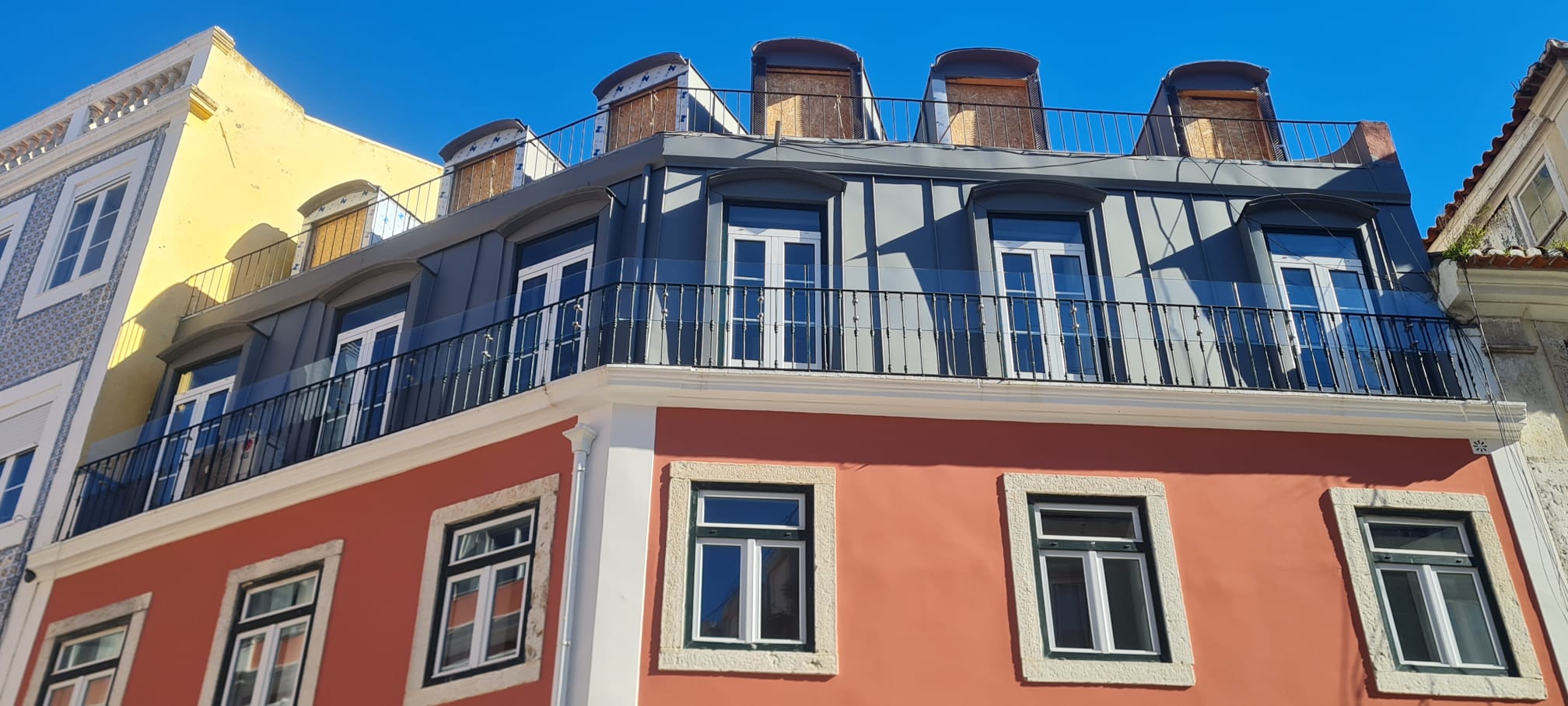
Mansards are a particular case in which facade and roof merge into a single inclined plane. Zinc or copper metal cladding is the classical answer for this element, ensuring visual continuity between the main roof, the mansards, the dormers and the chimney trims. We build mansards in standing-seam, interlocking-panel and, where the design calls for it, in curved (camarinha) systems.
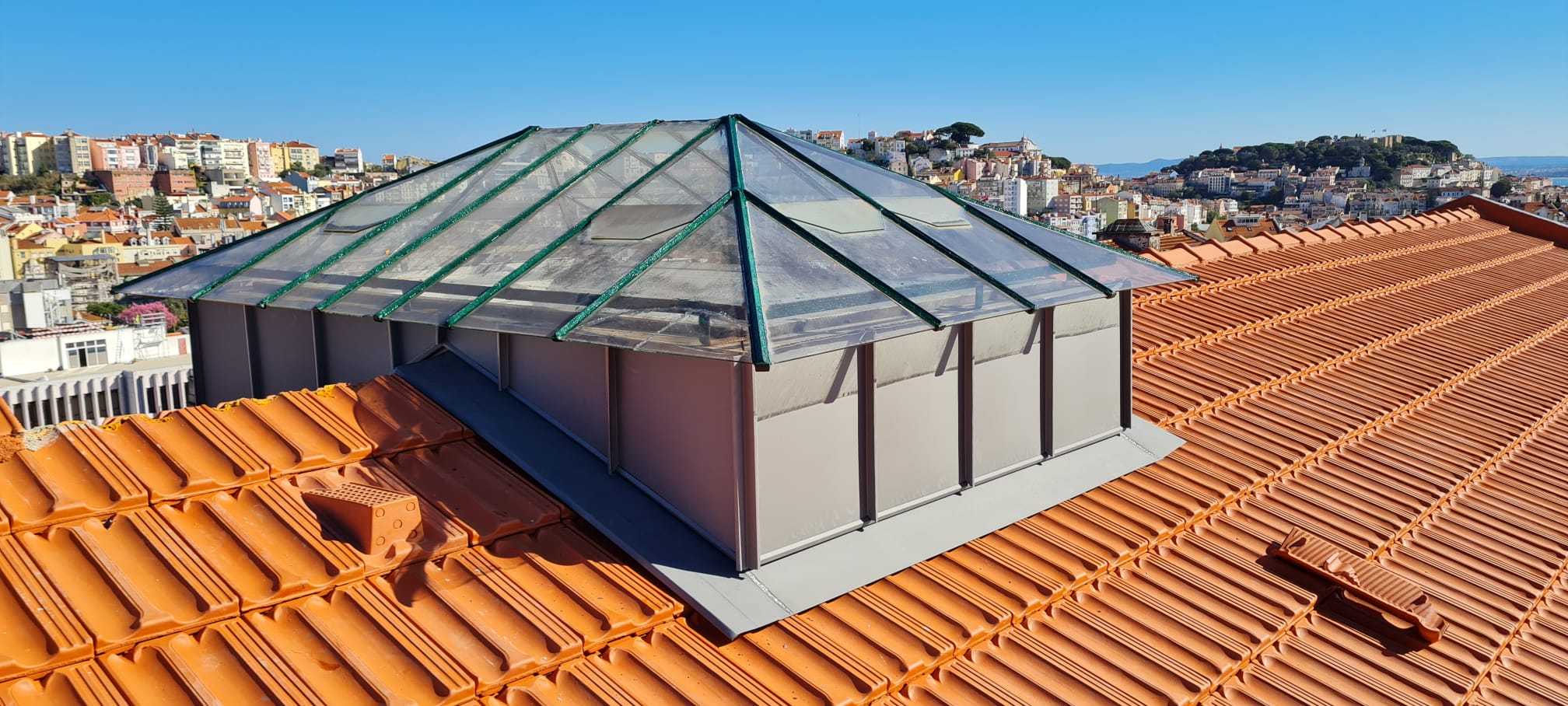
Detailing of mansards demands particular care at the transitions with the roof, on the side flashings and around the window openings, with all of these elements fabricated in our workshop in the same material and finish.
Where we work
ZincArt installs facades across mainland Portugal. We are regularly active in Lisbon, Porto, Braga, Coimbra, Aveiro, Leiria and Viseu, with occasional reach into other locations depending on the project.
For completed projects, see our project portfolio. The facade cladding solution often pairs with the roofing system, so see also zinc and copper roofing.